

September 27 in History: The Tripartite Pact, Mexico’s Independence and More
This date marks the 1940 signing of the Tripartite Pact, alongside milestones in independence, science, transport and culture.
This Day in History: September 27, 2026
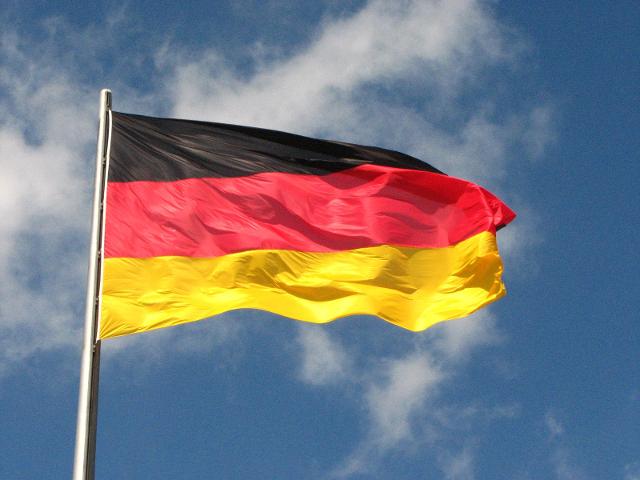
On September 27, 1940, Germany, Italy, and Japan signed the Tripartite Pact, formally linking three major powers fighting to expand their influence in Europe and Asia. Signed in Berlin during World War II, the agreement promised assistance if a signatory was attacked by a country not already involved in the European war or the conflict between Japan and China. It was intended largely to discourage the United States from entering the fighting. The pact helped define the Axis alliance, although its members continued to pursue separate military goals. It remains important for understanding how regional conflicts became part of a worldwide war.
Major Historical Events
1529: Ottoman forces begin the siege of Vienna
Get The Latest News!
Don't miss our top stories and need-to-know news everyday in your inbox.
Sultan Suleiman I’s army began besieging Vienna on September 27, bringing Ottoman expansion into direct confrontation with the Habsburg lands of central Europe. The campaign followed years of conflict over Hungary, where the Ottoman victory at Mohács in 1526 had weakened the existing kingdom.
Rain, supply difficulties, and determined resistance hindered the attackers. Ottoman forces withdrew in October. Vienna’s survival checked that campaign, but rivalry between the Ottoman and Habsburg empires continued for generations.
1821: Mexico’s independence reaches a decisive milestone
The Army of the Three Guarantees entered Mexico City on September 27, effectively ending Spanish rule after eleven years of fighting. Led by Agustín de Iturbide, the coalition brought together former royalists and independence supporters around a plan promising independence, the protection of Catholicism, and unity between people of Spanish and American birth.
A declaration of independence followed the next day. Independence did not immediately produce political stability: Mexico first became an empire and then a republic. Nevertheless, the army’s entry marked a decisive transfer of power and the emergence of a sovereign state.
1822: Champollion explains the key to Egyptian hieroglyphs
French scholar Jean-François Champollion presented his breakthrough in deciphering Egyptian hieroglyphs through a letter discussed at the Académie des Inscriptions et Belles-Lettres in Paris.
Drawing on the Rosetta Stone, other inscriptions, and his knowledge of Coptic, Champollion demonstrated the importance of phonetic signs in Egyptian writing. Earlier researchers, including Thomas Young, had made important advances. Champollion’s work helped turn those discoveries into a broader system of reading, opening Egyptian records to study and allowing historians to understand the civilization through its own surviving words.
1825: A railway demonstrates the possibilities of steam transport
The Stockton and Darlington Railway opened in northeastern England. On its inaugural journey, George Stephenson’s Locomotion No. 1 hauled a train carrying coal and passengers.
The railway was not the first railway of any kind, and its early operations also used horses. Its distinction was pioneering steam locomotives on a public railway. The project demonstrated that steam-powered rail transport could serve commerce and communities, helping prepare the way for networks that transformed travel, industry, and trade.
1905: Einstein submits his mass–energy paper
A short paper received by the journal Annalen der Physik on September 27 introduced Albert Einstein’s argument that a body’s energy content affects its mass. The relationship became widely known through the equation E = mc².
This was one of several papers Einstein produced during his remarkable year of 1905. Mass–energy equivalence later became central to understanding nuclear reactions and how stars produce energy. Its significance extended far beyond the paper’s original theoretical setting.
1940: The Axis alliance takes formal shape
The Tripartite Pact built on earlier ties between Germany and Italy and cooperation involving Germany and Japan. It recognized German and Italian leadership in establishing a new order in Europe and Japanese leadership in East Asia.
Despite its broad language, the agreement did not create a unified command. Its chief immediate purpose was strategic deterrence, particularly toward the United States. American entry into the war in December 1941 showed the limits of that effort.
1962: Silent Spring reaches readers
Rachel Carson’s Silent Spring was published in book form after excerpts had appeared in The New Yorker. Carson described how the widespread use of certain pesticides could affect birds, other wildlife, and ecological systems.
Her argument focused on the consequences of indiscriminate chemical use and the need for careful evaluation. The book prompted public debate, scientific scrutiny, and government attention. It became an influential work in the growth of modern environmental awareness and pesticide regulation.
2008: China completes its first spacewalk
Astronaut Zhai Zhigang stepped outside the Shenzhou 7 spacecraft on September 27, making China the third country, after the Soviet Union and the United States, to conduct an independently equipped spacewalk.
Crewmate Liu Boming assisted from the orbital module, while Jing Haipeng remained in the return module. The mission tested equipment and techniques needed for more complex operations, including the construction and maintenance of space stations.
Notable Births
1722: Samuel Adams
Born in Boston, Samuel Adams became a leading organizer of resistance to British rule in colonial Massachusetts. Through political writing, local organizing, and intercolonial cooperation, he helped build support for the American Revolution. He later signed the Declaration of Independence and served as governor of Massachusetts.
1918: Martin Ryle
British astronomer Martin Ryle helped develop radio astronomy and techniques for combining signals from multiple antennas. These methods allowed researchers to study distant radio sources with greater precision. He shared the 1974 Nobel Prize in Physics with Antony Hewish, the first Nobel recognition for astronomical research.
1932: Yash Chopra
Born in Lahore, then part of British India, Yash Chopra became a major director and producer in Hindi cinema. His films ranged from social dramas to romances, often combining music, family tensions, and emotional storytelling. The production company he founded, Yash Raj Films, became an important institution in Indian filmmaking.
1981: Brendon McCullum
New Zealand cricketer Brendon McCullum became known for aggressive batting, wicketkeeping, and leadership. He captained New Zealand to its first men’s Cricket World Cup final in 2015 and later moved into coaching. His attacking approach influenced discussion of tactics across several forms of the game.
Notable Deaths
1833: Rammohan Roy
Indian reformer Rammohan Roy died in Bristol, England. He advocated education, religious discussion, and social reform, including opposition to sati, the practice of widow immolation. His work helped shape nineteenth-century Indian intellectual life, and the Brahmo Sabha he founded became the basis of the Brahmo Samaj movement.
1917: Edgar Degas
French artist Edgar Degas died in Paris. Associated with the Impressionists, he developed a distinctive approach to movement, composition, and everyday subjects, especially dancers and working women. His paintings, pastels, and sculptures influenced later artists exploring modern life.
1965: Clara Bow
American actress Clara Bow, one of silent cinema’s best-known performers, died in Los Angeles. Her success in films such as It helped establish a new kind of screen celebrity during the 1920s. Her career also illustrates the pressures of early Hollywood fame and the industry’s transition to sound.
1996: Mohammad Najibullah
Former Afghan president Mohammad Najibullah was killed by Taliban forces after they captured Kabul. He had remained in a United Nations compound since losing power in 1992. His death marked another turning point in Afghanistan’s prolonged conflict and accompanied the establishment of Taliban rule in the capital.
Across September 27’s history, military alliances and struggles for independence sit alongside discoveries, artistic achievements, and changes in public awareness. The people born and remembered on this date shaped how societies governed, investigated, competed, and told stories. Together, these moments show how the broader human story grows from both major public events and individual contributions.
More like this:


- Most Popular


- Top Stories


- Most Recent