
This Day in Music History: Sept. 30, From Mozart’s ‘Magic Flute’ to Springsteen's ‘Nebraska’
From the premiere of Mozart’s “The Magic Flute” in 1791 to Bruce Springsteen’s “Nebraska” in 1982, Sept. 30 marks milestones across opera, broadcasting and popular music.
Wolfgang Amadeus Mozart brought one of opera's most enduring works to the stage on Sept. 30, 1791, when “The Magic Flute” premiered at Vienna's Theater auf der Wieden. Its combination of popular entertainment and ambitious music helped make it a lasting bridge between the opera house and a broader theater audience. On this date in 2026, that first performance stands 235 years in the past, but the work remains part of the operatic repertoire.
Get The Latest News!
Don't miss our top stories and need-to-know news everyday in your inbox.
Mozart directed the orchestra, while Emanuel Schikaneder, who wrote the libretto, played the birdcatcher Papageno. Mozart's sister-in-law Josepha Hofer sang the Queen of the Night. Written in German, the work mixed spoken dialogue with singing rather than relying on music alone to carry the action. Its fairy-tale adventures offered immediate theatrical appeal, while its themes of wisdom, love and moral testing gave audiences more to consider. That blend helped a production created for a suburban theater become an international classic.
Illinois supplied another important chapter on Sept. 30, 1933, when NBC began carrying a portion of Chicago's “National Barn Dance.” The occasion was a network expansion, not the program's original debut: WLS had launched the show in April 1924. Taking the Chicago broadcast to a network audience widened the reach of a format that brought country music, folk songs and rural comedy into American living rooms on Saturday nights.
The program appealed both to farm families and to city residents who had moved from rural communities. Its history included performers such as Gene Autry, Patsy Montana, Lulu Belle and Scotty, and the Hoosier Hot Shots. Their association with the show underscores Chicago's place in early country music broadcasting. Long before listeners could choose songs on demand, a regular broadcast created a shared musical gathering, connecting audiences through familiar sounds and introducing entertainers beyond the reach of a single theater.
Two years later, on Sept. 30, 1935, “Porgy and Bess” opened at Boston's Colonial Theatre before moving to Broadway on Oct. 10. George Gershwin's score, created through a collaboration with Ira Gershwin and DuBose and Dorothy Heyward, brought jazz, blues and folk elements into an ambitious American opera. Todd Duncan played Porgy, and Anne Brown played Bess, leading a cast whose performances helped establish the work's musical identity.
The Boston opening began the public life of a work whose songs would travel far beyond the theater. “Summertime” and “It Ain't Necessarily So” entered the popular repertoire, while the opera itself became a continuing subject of artistic debate. Its history also includes a concrete challenge to segregation: During the subsequent Washington engagement, Duncan and Brown refused to perform unless the National Theatre admitted Black patrons. The production's legacy therefore involves not only its score but also the agency of the Black artists who brought it to audiences.
On Sept. 30, 1954, Julie Andrews made her Broadway debut as Polly in Sandy Wilson's “The Boy Friend” at the Royale Theatre. Wilson wrote the book, music and lyrics for the lighthearted musical, set in Nice, France, in 1926. Its romantic misunderstandings and affectionate evocation of 1920s musical comedy gave Andrews a showcase in a production that ultimately ran for 485 performances.
The opening marked the start of an important Broadway career rather than an isolated success. Andrews later originated Eliza Doolittle in “My Fair Lady” and Guenevere in “Camelot.” Looking back from those larger landmarks, “The Boy Friend” remains significant as the production that first introduced her to Broadway audiences. Its original cast recording also preserved her performance, allowing listeners outside New York to hear the young singer in the role that launched that chapter of her career.
Britain's broadcasting landscape changed on Sept. 30, 1967, when BBC Radio 1 launched at 7 a.m. Tony Blackburn presented the opening program, and the Move's “Flowers in the Rain” was its first record. The new service answered an audience demand that offshore pirate broadcasters had demonstrated: Young listeners wanted a station centered on the popular music of their own generation.
Radio 1 brought that demand into the BBC's national operation, drawing on the style and personnel of pirate radio. Its importance extended beyond playing hit singles. John Peel's first session for the station aired the following day, beginning a history of performances that would expose listeners to thousands of artists. The September launch thus helped establish both a major outlet for commercial pop and a home for musical discovery.
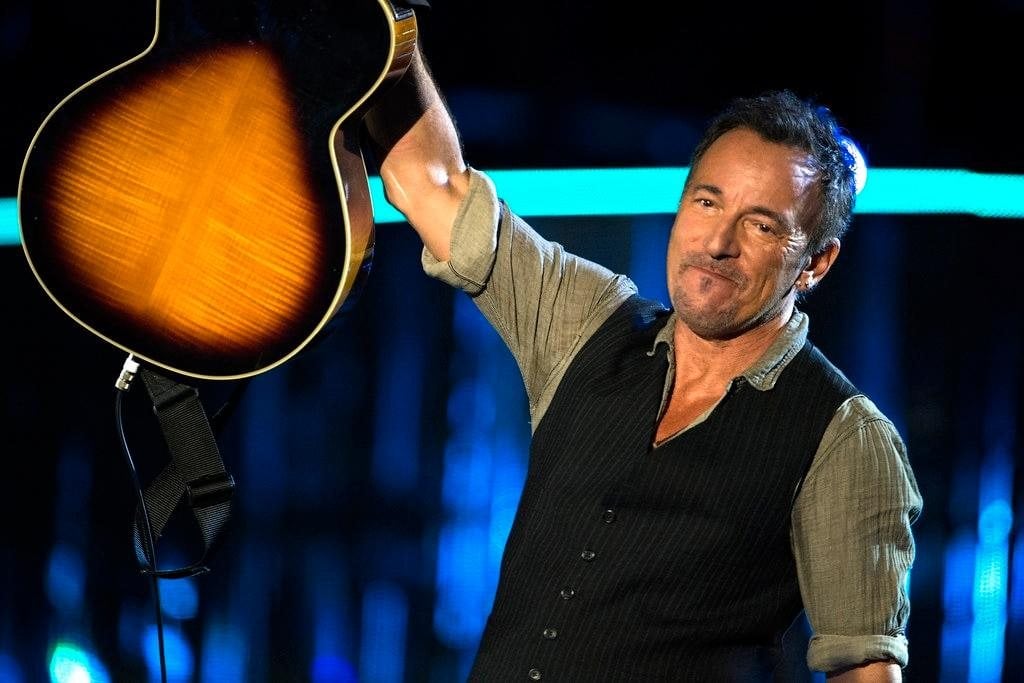
On Sept. 30, 1982, Bruce Springsteen took a markedly intimate approach to record-making with the release of “Nebraska” on Columbia Records. Recorded on a four-track cassette machine in his New Jersey bedroom, the album presented a spare acoustic sound. Its 10 tracks included “Atlantic City,” “Mansion on the Hill,” “Highway Patrolman” and “Reason to Believe,” placing troubled lives and difficult choices at the center of the listening experience.
The album's significance lies partly in that small-scale method. A bedroom recording became a major-label release without surrendering the raw atmosphere that defined it. Rather than offering reassurance through a large, celebratory sound, “Nebraska” asked listeners to stay close to its isolated characters. It remains an enduring example of how limited recording equipment can serve an expansive artistic purpose — another Sept. 30 milestone that changed expectations about where important music could begin.
More like this:
- Most Popular



- Top Stories


- Most Recent