This Day in History: October 8 Marks the Kashmir Earthquake and the Great Chicago Fire
This date marks the 2005 Kashmir earthquake, the Great Chicago and Peshtigo fires, and milestones in war, science, sport and culture.
On October 8, 2005, a powerful earthquake struck the Kashmir region and surrounding areas, killing more than 80,000 people and leaving millions without secure shelter. Communities in Pakistan-administered Kashmir and northern Pakistan suffered the heaviest losses, while deaths and destruction also occurred in Indian-administered Kashmir. Schools, hospitals, homes, and roads collapsed within seconds.
Get The Latest News!
Don't miss our top stories and need-to-know news everyday in your inbox.
The disaster demanded an international response, but damaged roads and mountainous terrain made rescue work difficult. With winter approaching, survivors urgently needed shelter, food, and medical care. The earthquake remains significant not only for its human cost but also for what it revealed about building safety, emergency planning, and the challenges of reaching isolated communities.
Major Historical Events
2005: The Kashmir earthquake
The magnitude 7.6 earthquake struck in the morning near Muzaffarabad, the capital of Pakistan-administered Kashmir. Many children were already in school when buildings collapsed. Landslides blocked access to entire settlements, forcing rescuers to rely heavily on helicopters and, in some places, journeys on foot.
Local residents, national authorities, international organizations, and foreign military teams took part in relief efforts. Reconstruction continued for years. The disaster drew renewed attention to earthquake-resistant construction and the need to prepare communities before an emergency occurs.
The earlier anniversaries below follow a chronological path through conflict, disaster, independence, sport, and scientific discovery.
1856: The Arrow incident deepens tensions in China
Chinese officials boarded the Arrow, a Chinese-owned vessel that had been registered in Hong Kong, and arrested members of its crew on suspicion of piracy. British representatives argued that the boarding violated British rights, although the vessel’s registration had expired and important details of the incident were disputed.
The confrontation became an immediate trigger for the Second Opium War. Britain, later joined by France, sought wider commercial access and diplomatic privileges in China. The resulting treaties opened additional ports and expanded foreign access, further limiting the Qing government’s control over trade and international relations.
1871: Fires devastate Chicago and northeastern Wisconsin
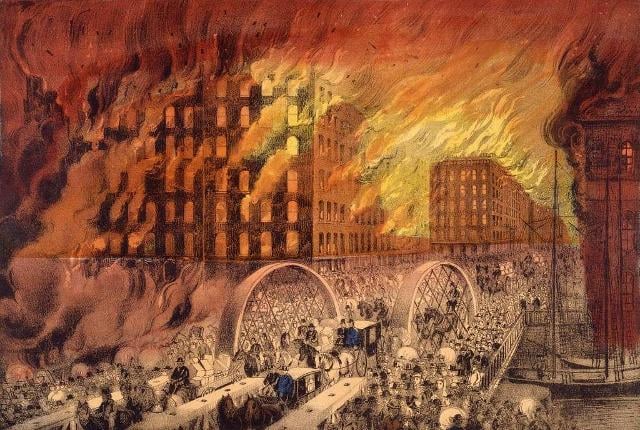
Fire broke out in Chicago on the evening of October 8. Dry weather, strong winds, and extensive wooden construction helped it spread across much of the city. Around 300 people died, and approximately 100,000 lost their homes. The familiar story blaming a cow belonging to Catherine O’Leary is not supported by reliable evidence.
That same night, a far deadlier fire swept through Peshtigo, Wisconsin, and surrounding communities. Estimates vary, but at least 1,200 people died. Together, these disasters showed how drought and vulnerable settlements could turn individual fires into regional emergencies. Chicago’s rebuilding encouraged changes in construction and fire protection, while Peshtigo became an important example in the history of wildfire risk.
1912: Montenegro begins the First Balkan War
Montenegro declared war on the Ottoman Empire, becoming the first member of the Balkan League to begin hostilities. Serbia, Bulgaria, and Greece soon joined the fighting. Their governments sought territory and aimed to end Ottoman rule over much of the remaining Ottoman-held Balkans.
The war sharply reduced Ottoman territory in Europe. However, disagreements over how to divide the gains led to the Second Balkan War in 1913. These conflicts displaced civilians and intensified regional tensions shortly before the First World War.
1932: The Indian Air Force is established
The Indian Air Force was formally established under British colonial rule. It began as a small service, with its first squadron formed the following year. Indian personnel gradually gained experience in military aviation, including during the Second World War.
After independence in 1947, the service became part of India’s national armed forces. October 8 is observed as Indian Air Force Day, marking the beginnings of an institution whose work has included defense, transport, evacuation, and disaster relief.
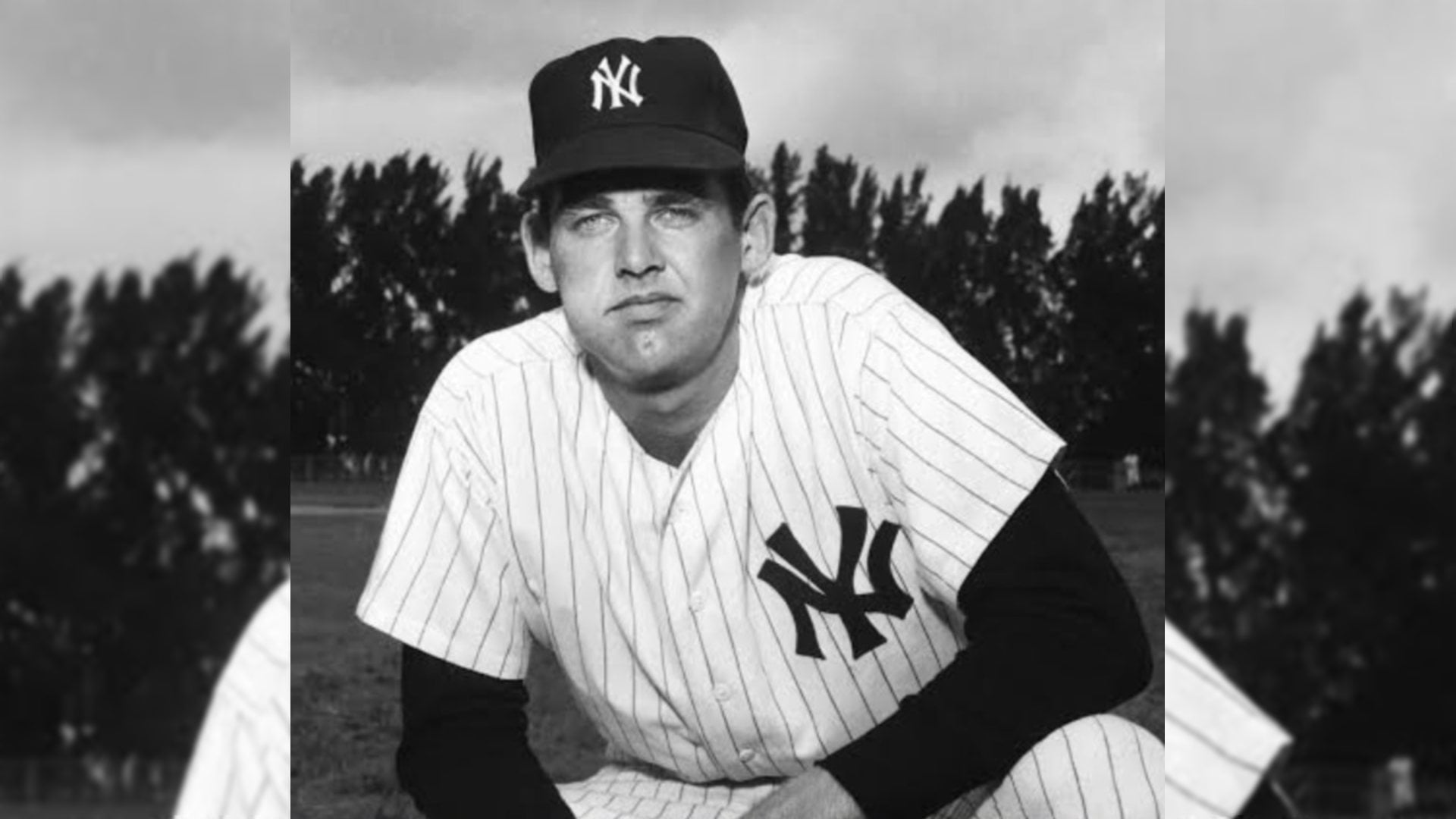
1956: Don Larsen pitches a World Series perfect game
At Yankee Stadium, New York Yankees pitcher Don Larsen retired all 27 Brooklyn Dodgers batters he faced in Game Five of the World Series. No opposing player reached base.
Larsen’s performance remains the only perfect game in World Series history. Its significance rests partly on the setting: a championship contest between established rivals, played under intense pressure. The Yankees won the game 2–0 and later won the series.
1967: Che Guevara is captured in Bolivia
Bolivian soldiers captured Ernesto “Che” Guevara near the village of La Higuera after fighting with his small guerrilla force. Guevara, who had helped lead the Cuban Revolution, had gone to Bolivia hoping to build a revolutionary movement.
His campaign struggled with shortages, limited local support, and military pressure. He was executed the following day, October 9. His capture marked the failure of the Bolivian campaign, while his writings and image continued to influence political movements internationally.
2014: A Nobel Prize recognizes sharper views of living cells
The Nobel Prize in Chemistry was awarded to Eric Betzig, Stefan W. Hell, and William E. Moerner for developing super-resolution fluorescence microscopy.
Their work allowed scientists to observe structures smaller than those that conventional light microscopes could clearly distinguish. By overcoming a long-standing technical limit, these methods helped researchers study proteins, cell organization, and biological processes in greater detail.
Notable Births
Juan Perón — 1895
Born in Argentina, Juan Perón became president and a central figure in the country’s twentieth-century politics. His governments expanded labor protections and social programs while also restricting political opposition. Peronism developed into a lasting political movement, bringing together different groups around ideas of social welfare, organized labor, and national development.
César Milstein — 1927
Argentine-born biochemist César Milstein helped develop a method for producing monoclonal antibodies: identical antibodies designed to recognize a specific target. Working with Georges Köhler, he created a technique that transformed medical research, diagnostic testing, and later treatments. They shared the 1984 Nobel Prize in Physiology or Medicine with Niels K. Jerne.
Sigourney Weaver — 1949
American actor Sigourney Weaver became internationally known for playing Ellen Ripley in the Alien films. The role helped broaden the place of women as central characters in science-fiction and action cinema. Her career also includes comedy, drama, and environmental documentary work.
Bruno Mars — 1985
Born in Honolulu, Bruno Mars became a widely recognized singer, songwriter, and performer. His music draws on pop, soul, funk, and rhythm and blues, bringing earlier musical styles to new audiences through both solo recordings and collaborations.
Notable Deaths
Premchand — 1936
Hindi and Urdu writer Premchand died in Varanasi, India. His novels and short stories examined rural poverty, debt, caste, and family life. Through works such as Godaan, he helped establish social realism as an important direction in modern Indian literature.
Clement Attlee — 1967
Former British prime minister Clement Attlee died aged 84. His government established the National Health Service, expanded social insurance, and nationalized several major industries. His premiership also coincided with the independence of India and Pakistan in 1947, a major turning point in the end of British imperial rule.
Willy Brandt — 1992
Willy Brandt, West German chancellor from 1969 to 1974, died aged 78. He is especially remembered for Ostpolitik, his policy of improving relations with East Germany and other Eastern European states. His efforts to reduce Cold War tensions earned him the 1971 Nobel Peace Prize.
October 8 brings together experiences that rarely fit into a single story: communities rebuilding after disaster, states pursuing power or independence, athletes achieving unusual feats, and researchers expanding what people can see and understand.
More like this:


- Most Popular


- Top Stories

- Most Recent