This Day in Music History: Oct. 27, From Heifetz to Taylor Swift
From Jascha Heifetz’s 1917 Carnegie Hall debut to Kelly Clarkson’s 2017 soul-influenced album, Oct. 27 marks milestones across music history.

This Day in Music History: Oct. 27, From Heifetz’s Debut to Pop Reinvention
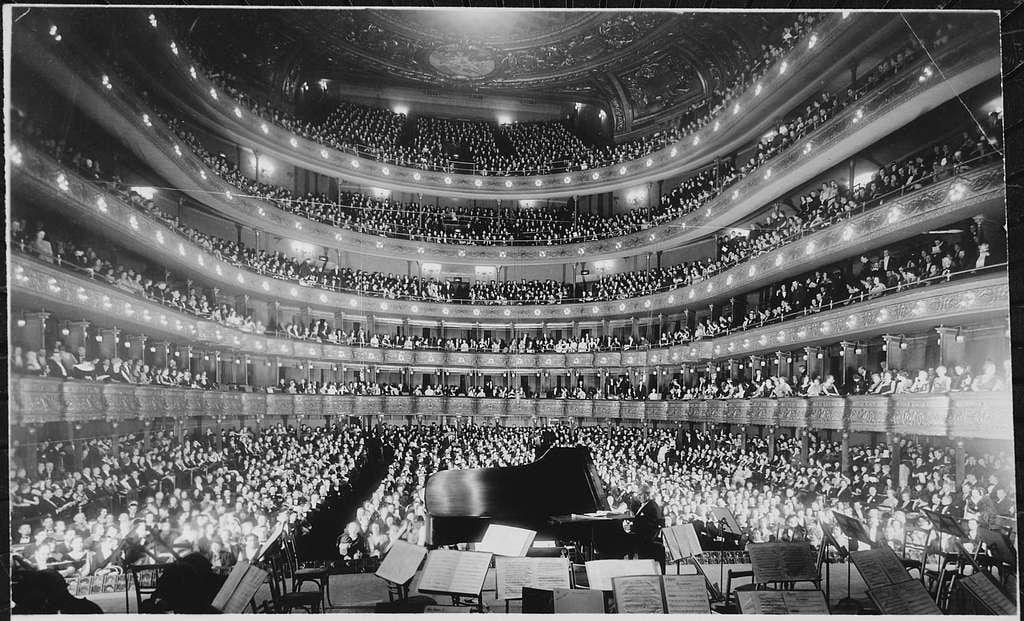
On Oct. 27, 1917, a 16-year-old violinist stepped onto the Carnegie Hall stage and delivered one of classical music’s defining American debuts. Jascha Heifetz’s first U.S. recital introduced American audiences to a performer whose precision and command would become a benchmark for violin playing. For this Oct. 27, 2026, look back, his arrival leads a century of milestones involving soul standards, Motown’s rise and artists finding new musical identities.
Get The Latest News!
Don't miss our top stories and need-to-know news everyday in your inbox.
Heifetz appeared at the New York concert hall with pianist André Benoist. Born in Vilnius, in what is now Lithuania, he had studied with Leopold Auer in St. Petersburg and performed extensively in Europe before reaching the United States. His American debut was therefore not the discovery of an untrained prodigy, but the arrival of an already accomplished young musician before a new audience.
The recital’s significance extended beyond an afternoon’s applause. Heifetz began recording for the Victor Talking Machine Co. that November, bringing his playing into homes as well as concert halls. The stage appearance and those early recordings opened complementary paths to his international influence: audiences could hear his performances in person, while records allowed listeners and fellow musicians to study his sound repeatedly.
On Oct. 27, 1960, Ben E. King participated in a New York recording session that produced “Spanish Harlem” and “Stand by Me.” The session documentation preserved on bassist Lloyd Trotman’s website identifies Trotman among the musicians, with Jerry Leiber and Mike Stoller producing and Stan Applebaum conducting. It was a remarkable day’s work for a singer establishing an identity outside the Drifters.
The recordings offered different settings for King’s expressive voice. “Spanish Harlem” placed him within a gently swaying, Latin-influenced arrangement, while “Stand by Me” built its appeal around a spare, memorable foundation and a direct promise of companionship. Rather than depending on elaborate vocal display, the performances made emotional clarity their central strength.
“Stand by Me” became especially durable. King’s recording reached No. 4 on Billboard’s pop singles chart in 1961, then returned to the Top 10 in 1986 after its use in the film of the same name. That second run demonstrated how a recording rooted in early soul could speak to listeners a generation later without being remade for contemporary radio.
Four years later, on Oct. 27, 1964, Motown released the Supremes’ “Come See About Me.” Written by Brian Holland, Lamont Dozier and Eddie Holland, and produced by Holland and Dozier, the single followed “Where Did Our Love Go” and “Baby Love.” Its release came before “Baby Love” had even reached the top of the Billboard Hot 100, showing how quickly the group’s breakthrough was unfolding.
“Come See About Me” subsequently became the Supremes’ third consecutive No. 1 single. All three songs came from the album “Where Did Our Love Go,” making the trio the first American group to generate three chart-topping singles from one LP. The achievement established that their success was no isolated hit and underscored the strength of Motown’s partnership between performers, songwriters and producers.
On Oct. 27, 1982, Prince released “1999,” a double album that brought his blend of funk, rock and electronic pop to a wider audience. Its songs included the title track, “Little Red Corvette” and “Delirious.” Across the album, synthesizers and tightly organized rhythms supported music that could be playful, anxious and expansive, sometimes within the same song.
The release also helped move Prince across boundaries that divided radio formats and television exposure. Videos from the album were among the early recordings by a Black artist to receive frequent MTV airplay. His mixed-gender, multiracial performing group presented a visual counterpart to music that resisted easy categorization. The album helped establish the sound and image that would become central to his 1980s breakthrough.
On Oct. 27, 2014, Taylor Swift released “1989,” making her move from country-rooted songwriting into a full pop album explicit. Named for her birth year, the record featured synthesizer-driven production and collaborations with Max Martin, Shellback, Jack Antonoff and others. “Shake It Off,” “Blank Space” and “Style” preserved her interest in sharply drawn situations while giving those stories a different musical setting.
The shift brought major recognition when “1989” won album of the year at the 2016 Grammy Awards. Its importance was not simply that Swift changed genres, but that she made the transition the organizing idea of an entire album rather than treating pop as an occasional crossover destination.
On Oct. 27, 2017, Kelly Clarkson released “Meaning of Life,” her first album for Atlantic Records. The project emphasized soul and R&B, giving her powerful voice room beyond the pop-rock arrangements associated with much of her earlier work. Songs including “Love So Soft” and “Whole Lotta Woman” made that direction unmistakable. Like several other Oct. 27 milestones, the release marked an artist using a familiar instrument — in Clarkson’s case, her voice — to open a different chapter.
More like this:

- Most Popular



- Top Stories


- Most Recent