


This Day in History: November 1 Marks Unveiling of Sistine Chapel
From the Lisbon earthquake and the Sistine Chapel’s unveiling to the start of Algeria’s independence war, November 1 marks turning points across centuries.
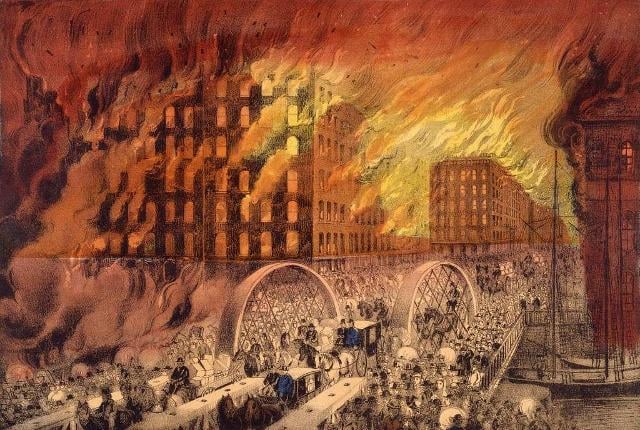
On November 1, 1755, a powerful earthquake struck Lisbon, Portugal, setting off a tsunami and fires that devastated much of the city. The disaster killed tens of thousands of people in Portugal and neighboring areas, although the exact toll remains uncertain. Lisbon was a major port and the center of a worldwide trading empire, so its destruction had consequences far beyond Portugal. The response helped shape modern disaster planning, earthquake research, and ideas about rebuilding cities. It also prompted lasting questions about how people understand and respond to catastrophe.
Get The Latest News!
Don't miss our top stories and need-to-know news everyday in your inbox.
November 1 connects that disaster with other turning points: the unveiling of a celebrated work of art, the end of an empire, advances in science, and struggles over national independence.
Major Historical Events
1512: Michelangelo’s Sistine Chapel ceiling goes on public view
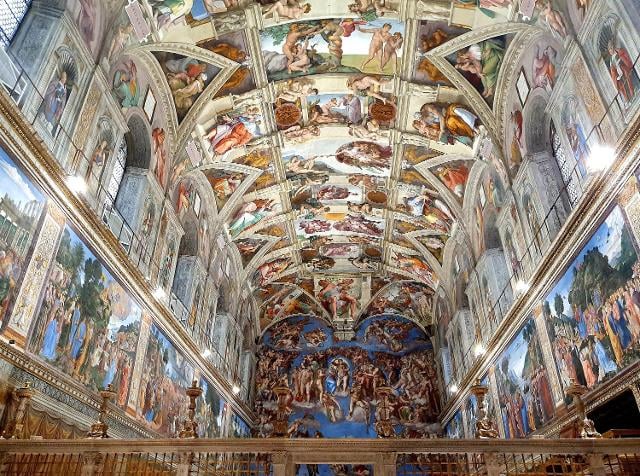
The newly painted ceiling of the Sistine Chapel in Vatican City was unveiled on November 1, 1512, during celebrations for All Saints’ Day. Commissioned by Pope Julius II, Michelangelo had spent roughly four years creating its biblical scenes and monumental figures.
Among its best-known images is The Creation of Adam. The ceiling became a defining achievement of Renaissance art, influencing generations of artists through its treatment of the human body, movement, and large-scale storytelling.
1755: An earthquake transforms Lisbon
The Lisbon earthquake struck on the morning of All Saints’ Day, when many residents were attending church. Buildings collapsed, fires spread, and tsunami waves swept into waterfront areas. Damage extended into other parts of Portugal, Spain, and North Africa.
Under the leadership of Sebastião José de Carvalho e Melo, later known as the Marquis of Pombal, authorities organized relief and reconstruction. Lisbon’s rebuilt center featured orderly streets and structures designed to better withstand shaking. Officials also gathered reports about the earthquake’s effects, an important early effort to study a natural disaster systematically.
1911: Aircraft enter a new phase of warfare
During the Italo-Turkish War, Italian officer Giulio Gavotti dropped small bombs from an airplane over Ottoman-held positions in what is now Libya. His flight on November 1 is generally recognized as the first aerial bombing attack from a powered aircraft in combat.
The immediate military effect was limited. Its longer-term significance lay in demonstrating another possible use for a technology still in its infancy. Aircraft would soon become central to reconnaissance, combat, and attacks on targets far behind front lines.
1922: Turkey’s national assembly abolishes the Ottoman sultanate
Turkey’s Grand National Assembly abolished the Ottoman sultanate on November 1, ending an institution that had lasted for centuries. The decision followed the Ottoman defeat in World War I and the success of the Turkish nationalist movement led by Mustafa Kemal, later known as Atatürk.
The last sultan, Mehmed VI, left Istanbul later that month. Abolition cleared the way for the Republic of Turkey, proclaimed in 1923. The separate office of caliph remained briefly before being abolished in 1924.
1952: The first full-scale thermonuclear test
The United States conducted the Ivy Mike test at Enewetak Atoll in the Marshall Islands on November 1, local time. It was the first successful full-scale test of a thermonuclear device, often called a hydrogen bomb.
Unlike earlier atomic weapons, the device used nuclear fusion as a major source of explosive energy. Its enormous size made it unsuitable for immediate deployment, but the experiment demonstrated a new level of destructive power. The test accelerated the nuclear arms competition and left lasting environmental consequences in the Pacific.
1954: Algeria’s war of independence begins

Coordinated attacks by the National Liberation Front on November 1 marked the beginning of the Algerian War. Algeria had been under French rule since the nineteenth century, with deep inequalities in political rights, land ownership, and economic opportunity.
The conflict involved guerrilla warfare, French military campaigns, attacks on civilians, torture, and mass displacement. It also caused a major political crisis in France. Algeria gained independence in 1962, after a war whose effects continued to shape both countries.
1963: Arecibo Observatory opens
The Arecibo Observatory in Puerto Rico was inaugurated on November 1. Its enormous radio dish, built into a natural depression in the landscape, gave researchers a powerful instrument for studying the atmosphere, planets, and distant objects.
Work conducted at Arecibo contributed to discoveries about pulsars and provided evidence supporting the existence of gravitational waves. The observatory also became widely recognized through films and television. Its main telescope collapsed in 2020, ending a remarkable period of astronomical research.
1993: The European Union formally begins
The Maastricht Treaty entered into force on November 1, establishing the European Union. It expanded cooperation among member countries beyond the earlier European Communities and introduced European Union citizenship.
The treaty also laid out a path toward economic and monetary union, eventually leading to the euro. Its implementation marked an important stage in Europe’s postwar effort to connect national economies and institutions while negotiating the limits of shared authority.
Notable Births
Antonio Canova — 1757
Born in Possagno, in what is now Italy, Antonio Canova became one of the leading sculptors of the Neoclassical period. Works such as Psyche Revived by Cupid’s Kiss combined subjects drawn from antiquity with carefully observed human expression. His commissions across Europe helped make sculpture a prominent part of the era’s international artistic culture.
Alfred Wegener — 1880
German scientist Alfred Wegener proposed that continents had once been joined and later moved apart. His theory of continental drift initially faced strong resistance, partly because he could not adequately explain what moved the continents. Later discoveries about the ocean floor and plate tectonics established the broader framework that explained their movement.
L. S. Lowry — 1887
English painter Laurence Stephen Lowry became known for scenes of industrial towns, factories, and crowds in northern England. His distinctive figures and urban landscapes preserved an artistic record of communities shaped by manufacturing and working life.
Gary Player — 1935
South African golfer Gary Player became one of the sport’s most successful international competitors. He won nine major championships and completed the career Grand Slam by winning all four men’s majors. His extensive international schedule helped broaden professional golf’s global audience.
Notable Deaths
Charles II of Spain — 1700
The death of Charles II without a direct heir ended the Spanish Habsburg line. Rival claims to his territories helped trigger the War of the Spanish Succession. The resulting settlements reshaped European power and separated the Spanish and French crowns despite their shared Bourbon dynasty.
Alexander III of Russia — 1894
Russian emperor Alexander III died after a reign marked by strong centralized rule and resistance to constitutional reform. His government promoted industrial development while restricting political opposition and pursuing Russification policies. His son Nicholas II inherited an empire facing growing social and political pressures.
Yma Sumac — 2008
Peruvian-born singer Yma Sumac gained international recognition for her extraordinary vocal range and theatrical performances. Her recordings introduced many listeners to stylized presentations of Andean musical themes, blended with orchestral arrangements aimed at international audiences.
Across these anniversaries, human experience appears in many forms: rebuilding after disaster, challenging established explanations, creating art, and changing political institutions.
More like this:


- Most Popular


- Top Stories


- Most Recent


