

Budzinski Leads Bipartisan Postal Caucus In Pressing USPS For Answers On $19.5 Billion Borrowing Request
13 lawmakers want a detailed accounting of how the proposed increase would be used and whether it would improve delivery performance.
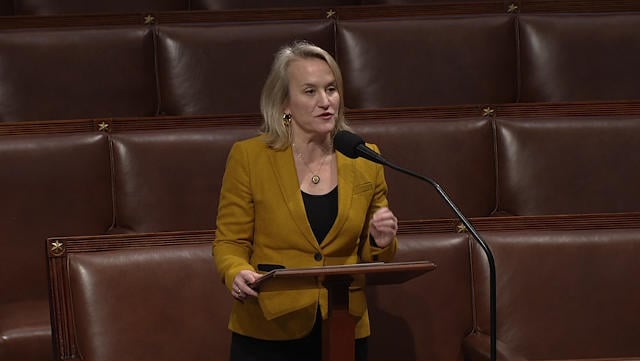 SPRINGFIELD – This week, Congresswoman Nikki Budzinski (IL-13) led 13 members of the Congressional Postal Service Caucus in sending a bipartisan letter to Postmaster General David Steiner seeking clear answers on how the U.S. Postal Service would use a requested $19.5 billion increase in its statutory borrowing authority. In the letter, the lawmakers ask the Postmaster General whether the increase in borrowing authority would be used to improve on-time delivery for the communities they represent, or to implement more of the network changes that have slowed mail service since 2023.
Earlier this year, the Postmaster General told the Senate Homeland Security and Governmental Affairs Committee that increased borrowing authority is the "most immediate solution" to the Postal Service's financial crisis. The Caucus says it is ready to work with USPS on common-sense solutions, but that Congress needs a full accounting before raising the borrowing limit from $15 billion to $34.5 billion.
Get The Latest News!
Don't miss our top stories and need-to-know news everyday in your inbox.
The members wrote, “We have all seen service decline in our districts as a result of the network changes stemming from the Mail Processing Facility Review (MPFR) and Regional Transportation Optimization (RTO) and have concerns that granting a significant increase in the Postal Service’s borrowing limit would go towards continued investment in network changes that are not working for our constituents.”
They continued, “For those reasons, we are asking that the Postal Service provide both Member- and staff-level briefings during the November House of Representatives session period to discuss the Postal Service’s financial plans if Congress were to increase the Postal Service’s borrowing limit.”
The full text of the letter is HERE below:
November 4, 2026
Postmaster General David P. Steiner
475 L’Enfant Plaza SW
Washington, DC 20260
Postmaster General Steiner,
As members of the Congressional Postal Service Caucus, we are writing with several important questions regarding the Postal Service’s recent proposal to Congress asking for a $19.5 billion increase in the Postal Service’s statutory borrowing authority.
Earlier this year, you testified to both the House Committee on Oversight and Government Reform and the Senate Homeland Security and Governmental Affairs Committee (HSGAC) about the financial situation of the Postal Service. During your testimony to HSGAC, you stated that getting an increase in your borrowing authority is the “most immediate solution” to the Postal Service’s current financial crisis. The Postal Service has also sent correspondence to Congress asking for increased borrowing authority, amongst multiple other proposed financial reforms. The Congressional Postal Service Caucus is committed to working with you and other postal stakeholders to find common-sense solutions to the Postal Service’s current financial situation.
However, we also have very serious questions as to how this money would be allocated and how it could be used to improve lagging service performance for our constituents. Over the last six years, the Postal Service has continued to invest in the Delivering for America (DFA) plan and the results have been mixed at best. While we agree with the Postal Service’s goal to modernize and invest in outdated facilities, the various changes to the network through the Mail Processing Facility Review (MPFR) process and the Regional Transportation Optimization (RTO) have harmed both postal employees and customers all while USPS continues to lose upwards of $9 billion annually.
In 2024, when the Postal Service first introduced the RTO plan, projections from USPS claimed that it would save USPS about $650 million per year. Despite warnings from the Postal Regulatory Commission and the USPS Inspector General’s office (USPS OIG), the Postal Service’s leadership continued to move forward with the implementation of the plan, and while service for tens of millions of Americans has significantly declined as a result, the Postal Service’s financial situation has not improved.
Earlier this year, the USPS OIG stated about the RTO implementation that “the Postal Service has not established long-term savings targets, financial tracking, or modeling discipline necessary to effectively guide and assess such a complex transformation.”
In recent years, the Postal Service has also rolled out significant changes to its network and operational structure through the MPFR process. In 2023 and 2024, Processing and Distribution Centers (P&DCs) across the country were downsized or closed in favor of facilities in larger urban centers. Since these changes were made, more mail from outlying or rural areas has had to travel further distances to be sorted. In places like Atlanta and Richmond the USPS OIG found that these changes negatively hurt Postal Service customers. While we support modernization and investment in Postal Service facilities, these network changes, coupled with the RTO implementation, have hurt service for our constituents, especially those in rural communities.
On November 29, 2024, the Postal Service submitted to the PRC its intention to further loosen performance targets for Market Dominant mail by roughly 10%. These reduced targets make clear that Postal Service’s restructuring plan will not prioritize service performance for Americans who rely on the Postal Service. Although these targets may be “more realistic than in recent years,” it further cements declining service under the DFA plan.
As members of the Congressional Postal Service Caucus, we have all seen service decline in our districts as a result of the network changes stemming from the MPFR and RTO and have concerns that granting a significant increase in the Postal Service’s borrowing limit would go towards continued investment in network changes that are not working for our constituents.
For those reasons, we are asking that the Postal Service provide both Member- and staff-level briefings during the November House of Representatives session period (November 9 to November 20) to discuss the Postal Service’s financial plans if Congress were to increase the Postal Service’s borrowing limit.
Secondly, we respectfully ask that you reply to the following questions by November 13th:
- Please provide the Congressional Postal Service Caucus with a detailed overview of how the Postal Service would spend the $19.5 billion increase in borrowing authority.
- If Congress were to increase the Postal Service’s borrowing authority to $34.5 billion, how much of the additional $19.5 billion would go towards further implementation of the DFA Plan?
- How much would go towards deferred maintenance at facilities?
- How much, if any, would go towards the further implementation of network changes, including the RTO or future MPFR processes?
- Please provide information regarding how much the Postal Service is currently spending on capital expenditure and how this may change were Congress to authorize a borrowing authority increase.
- How would the Postal Service use the increase in borrowing authority to improve on-time delivery performance, especially in rural areas?
- How much of the $19.5 billion increase would go directly to working to improve on-time delivery?
- How much money has the RTO saved the Postal Service and how does this vary from the Postal Service’s initial RTO financial projections?
- lease provide information on how the RTO has impacted mail on-time delivery for mail originating from outside the 50-mile radius under the RTO.
- What measures is the Postal Service currently taking to help mitigate mail delays stemming from the RTO?
- If Congress were to increase the Postal Service’s borrowing limit would the Postal Service consider reversing the 2024 changes to service targets since the Postal Service would have more money to prioritize on-time delivery?
- Please provide the Caucus with an explanation of why the Postal Service decided to request $34.5 billion, and if Congress were to increase the borrowing authority by $19.5 billion how long you anticipate this infusion of cash would sustain Postal Service operations under current operating conditions.
We appreciate your time and attention to these questions and look forward to your response.
More like this:


- Most Popular



- Top Stories


- Most Recent