

This Day in History: November 10
From Kristallnacht and the Battle of Surabaya to the premieres of Sesame Street and a landmark lunar rover mission, November 10 spans moments of upheaval, discovery and cultural change.
This Day in History: November 10, 2026
Get The Latest News!
Don't miss our top stories and need-to-know news everyday in your inbox.
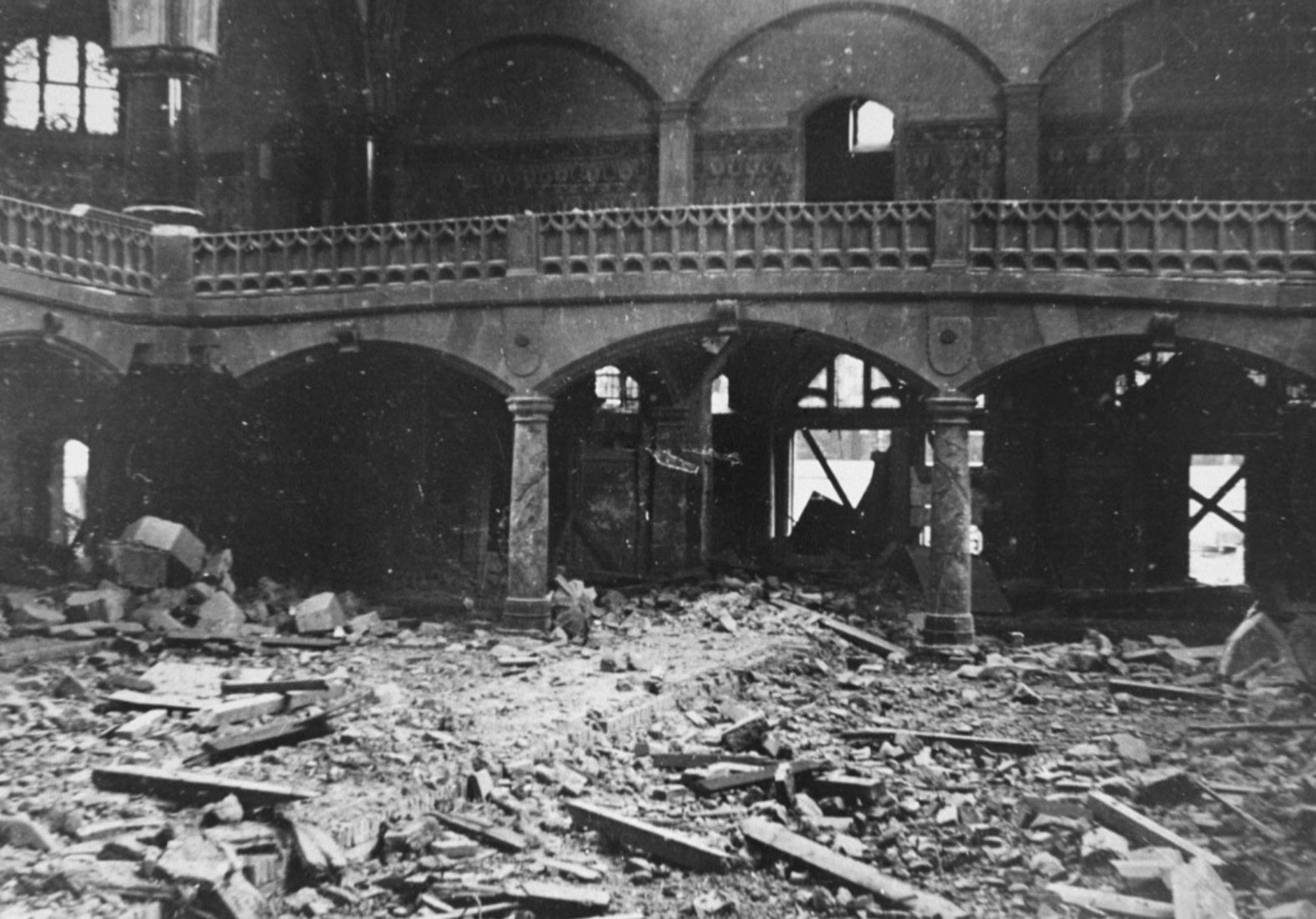
During the night of September 9–10, 1938, Nazi-organized violence swept across Germany, annexed Austria, and the occupied Sudetenland. Synagogues were burned, Jewish homes and businesses were attacked, and about 30,000 Jewish men were arrested and sent to concentration camps. Commonly called Kristallnacht, or the “Night of Broken Glass,” the pogrom marked a major escalation in Nazi persecution. It showed that discrimination and exclusion were giving way to widespread, openly organized violence. Its history remains central to understanding the Holocaust and the consequences of state-sponsored persecution.
November 10 also connects events as different as a medieval battle, an African independence struggle, and the arrival of a children’s television program that changed educational broadcasting. This account follows the month/day interpretation of 11/10/2026: November 10.
Major Historical Events
1444: The Battle of Varna reshapes southeastern Europe
Near Varna, in present-day Bulgaria, Ottoman forces under Sultan Murad II defeated a crusading army led by King Wladyslaw III of Poland and Hungary and the Hungarian commander John Hunyadi. Wladyslaw was killed during the fighting.
The campaign had sought to push back Ottoman expansion in the Balkans. Its defeat strengthened Ottoman control and weakened hopes of substantial outside military assistance for the Byzantine Empire. Constantinople fell to the Ottomans nine years later, although that outcome had several causes beyond this single battle.
1871: Henry Morton Stanley meets David Livingstone
After a lengthy search financed by the New York Herald, journalist and explorer Henry Morton Stanley reached David Livingstone at Ujiji, beside Lake Tanganyika in present-day Tanzania.
Livingstone’s prolonged absence had prompted international concern. Their meeting became a major newspaper story and encouraged further interest in African exploration. The encounter also belonged to a wider history involving African guides, porters, traders, and communities whose work made European expeditions possible. Stanley’s famous greeting, “Dr. Livingstone, I presume?” is widely remembered, though its exact wording cannot be independently verified.
1928: Emperor Hirohito is formally enthroned
Japan held Emperor Hirohito’s enthronement ceremony in Kyoto on November 10, 1928. He had succeeded his father, Emperor Taisho, in 1926; the later ceremony publicly affirmed his position through longstanding imperial rituals.
His reign, known as the Showa era, would encompass Japanese military expansion, the Second World War, defeat, and postwar reconstruction. The ceremony itself reflected the importance of the imperial institution in Japan’s public life before those transformations.
1938: Anti-Jewish violence marks a turning point
The pogrom described above continued into November 10. Nazi authorities presented the attacks as a spontaneous response to the killing of a German diplomat in Paris, but party organizations and officials directed and enabled the violence.
Firefighters often protected neighboring buildings while allowing synagogues to burn. Jewish communities were subsequently forced to bear financial penalties and repair costs. The attacks drew international condemnation, but opportunities for Jewish refugees remained limited. They marked a decisive shift toward more systematic violence and forced removal from German society.
1945: The Battle of Surabaya begins
British-led forces launched a major assault on Indonesian fighters in Surabaya, East Java, amid the struggle that followed Indonesia’s declaration of independence in August 1945.
Allied troops had arrived to disarm Japanese forces and recover prisoners of war. Their presence became entangled with Dutch efforts to restore colonial rule. Following escalating clashes and the death of a British commander, the battle caused heavy casualties and extensive destruction. Indonesian resistance became an enduring symbol of the independence struggle, and November 10 is commemorated in Indonesia as Heroes’ Day.
1969: Sesame Street premieres
American public television introduced Sesame Street, combining puppets, songs, animation, and live-action scenes to teach young children.
Developed with input from educators and researchers, the program aimed to make early learning widely accessible, including to children with limited access to preschool. Its approach influenced educational broadcasting around the world. International adaptations later incorporated local languages, settings, and teaching needs rather than simply reproducing the American program.
1970: The Soviet Union launches Luna 17
The Soviet spacecraft Luna 17 began its journey to the Moon carrying Lunokhod 1. After landing on November 17, it deployed the first successful remotely operated rover to travel across the surface of another celestial body.
Controlled from Earth, Lunokhod 1 photographed the landscape and studied the lunar surface over roughly ten months. The mission demonstrated that mobile robots could conduct sustained exploration beyond Earth, helping establish an approach later used on Mars.
1989: Bulgaria’s longtime leader leaves power
Todor Zhivkov was removed as leader of the Bulgarian Communist Party after more than three decades in power. His departure came one day after the opening of the Berlin Wall, during a period of rapid political change across Eastern Europe.
The initial change was an internal party decision, not the immediate establishment of democracy. Nevertheless, it opened the way to opposition organizing, constitutional changes, and multiparty elections in 1990.
2001: China’s WTO membership is approved
At a ministerial meeting in Doha, Qatar, World Trade Organization members approved China’s accession package. China formally became a member on December 11.
The agreement followed years of negotiations over tariffs, market access, and trade rules. Membership deepened China’s integration into the global economy, affecting manufacturing, investment, supply chains, and employment across many countries.
Notable Births
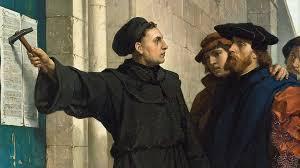
Martin Luther, born in 1483, became a central figure in the Protestant Reformation. His challenges to church practices and authority helped divide Western Christianity and reshape European religion, education, and politics. His legacy also includes anti-Jewish writings that contributed to later traditions of hostility.
Friedrich Schiller arrived in 1759 in Marbach, in present-day Germany. A playwright, poet, and historian, he explored freedom, power, and moral responsibility. His poem “Ode to Joy,” later set by Beethoven, became one of his most internationally familiar works.
Andrei Tupolev, born in 1888, helped shape Soviet aviation through aircraft design and engineering leadership. His design organization produced influential civilian and military aircraft, contributing to the development of long-distance air transport and aerospace technology.
Ennio Morricone was born in Rome in 1928. His film scores used unusual combinations of orchestral music, whistles, voices, and everyday sounds. Work on films including The Good, the Bad and the Ugly and The Mission helped expand the expressive possibilities of cinema music.
Mike Powell, born in 1963, earned a lasting place in athletics when he jumped 8.95 meters at the 1991 World Championships. The performance surpassed Bob Beamon’s celebrated 1968 long-jump world record.
Notable Deaths
Arthur Rimbaud died in 1891, aged 37. Although his literary career was brief, the French poet’s imagery and experiments with language influenced modern poetry and later generations of writers.
Mustafa Kemal Atatürk died in Istanbul in 1938. The founder and first president of the Republic of Turkey led sweeping changes in law, education, language, and government. His legacy includes both the construction of a secular republic and a political system that restricted opposition.
Ken Saro-Wiwa was executed in Nigeria in 1995, alongside eight other Ogoni activists, after proceedings widely condemned internationally as unfair. A writer and campaigner, he drew attention to environmental damage and political exclusion in the oil-producing Niger Delta.
Across November 10’s history, violence and political upheaval stand beside exploration, creativity, and learning. The people born and remembered on this date shaped institutions, challenged assumptions, and widened cultural possibilities. Together, their stories show how human history develops through both large public turning points and individual contributions whose influence reaches far beyond a single lifetime.
More like this:


- Most Popular


- Top Stories

- Most Recent