This Day in Music History: Nov. 19, From Progressive Rock to the Beatles’ Return
From Emerson, Lake & Palmer’s “Brain Salad Surgery” to the Beatles’ “Anthology,” Nov. 19 marks several milestones in musical reinvention.
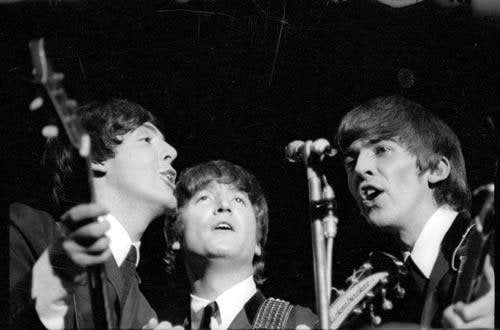
The Beatles turned a look backward into a new musical chapter on Nov. 19, 1995, when “The Beatles Anthology” premiered on American television and the “Free as a Bird” video received its first public showing on ABC. The occasion brought the band's history and a newly completed recording together, showing how archival recordings could become more than documents of the past. That broadcast stands out among the musical anniversaries remembered on Nov. 19, 2026.
Get The Latest News!
Don't miss our top stories and need-to-know news everyday in your inbox.
The day's earlier milestones begin with a different kind of studio ambition. On Nov. 19, 1973, Emerson, Lake & Palmer released “Brain Salad Surgery” in the United States. Keyboardist Keith Emerson, singer and bassist Greg Lake and drummer Carl Palmer recorded the album at London's Advision Studios between June and September. The record eventually reached No. 11 in the United States and No. 2 in Britain, giving a substantial audience to music built around instrumental complexity rather than the limits of a conventional pop single.
Its centerpiece, the multipart “Karn Evil 9,” placed extended composition and synthesizer-driven storytelling at the heart of a rock album. The record also brought classical material into the trio's musical world. Looking back on its creation, Palmer described it as a peak of the group's creativity. Its significance lies in that combination: technical skill was not merely decoration but a central part of the music's identity. “Brain Salad Surgery” remains a useful illustration of how far progressive rock stretched the album format.
On Nov. 19, 1982, Led Zeppelin released “Coda” in the United States, offering an ending assembled from recordings that had remained outside its previous albums. Produced by Jimmy Page, the eight-track collection drew on sessions and performances from 1970 through 1978. Its recording locations ranged from London's Royal Albert Hall to studios in Montreux, Switzerland, and Stockholm. Rather than presenting a newly reunited group, it opened another window into work already committed to tape.
The project carried particular weight after drummer John Bonham's death in September 1980. Page later explained that he wanted “Bonzo's Montreux,” a drum instrumental he had worked on with Bonham in 1976, to serve as the collection's backbone. Revisiting the recordings was difficult, he recalled, but it allowed him to showcase his bandmate's musicianship. In that sense, “Coda” was both an archival release and a musical tribute, preserving performances that otherwise might have remained outside the band's official album catalog.
Thirteen years later, the Beatles' television event gave archival material a different purpose. “The Beatles Anthology,” which began its American run on Nov. 19, 1995, told the group's story through interviews, home movies, concert footage and studio recordings. Its narrative followed the musicians from their Liverpool beginnings through their 1970 breakup. The surviving members' participation made it an opportunity to hear them describe their shared history, rather than leave that account entirely to outside commentators.
“Free as a Bird” made that retrospective an occasion for new collaboration. Paul McCartney, George Harrison and Ringo Starr added performances to a home demonstration John Lennon had recorded in 1977, with Jeff Lynne helping produce the finished track. Joe Pytka's video, unveiled that night, threaded references to Beatles songs through a bird's-eye journey. The work did not recreate a four-person studio session; it connected a surviving recording with later performances, making the limitations and possibilities of the archive part of the music itself.
On Nov. 19, 2002, Shania Twain released “Up!” in North America, taking a different approach to the possibilities of studio production. Created with producer and collaborator Robert John “Mutt” Lange, the album offered versions tailored to pop, country and international audiences. Color-coded editions distinguished the approaches. Instead of treating crossover appeal as something that happened after a country record became popular, the project built different musical settings into its presentation from the start.
The strategy supported songs including “I'm Gonna Getcha Good!,” the title track and “Ka-Ching!” The album debuted atop both the American pop and country album charts. Its importance went beyond that opening result: the different mixes made the relationship between a song and its arrangement unusually visible. Listeners could encounter Twain's material through different production styles, underscoring her position between country music and international pop rather than requiring one version to serve every audience.
Also arriving in American stores on Nov. 19, 2002, was Audioslave's self-titled debut. The group joined former Soundgarden singer Chris Cornell with Rage Against the Machine guitarist Tom Morello, bassist Tim Commerford and drummer Brad Wilk. Recorded in Los Angeles with producer Rick Rubin, the album introduced a new band whose members already carried substantial musical identities. The release offered a test of whether those established approaches could support something beyond a familiar-name collaboration.
Songs including “Cochise” and “Like a Stone” supplied the answer in contrasting forms: forceful, riff-centered rock alongside slower, melodic material. Cornell's singing and the instrumental trio's rhythmic attack produced a sound connected to their earlier groups without simply reproducing either one. Alongside the day's archival projects, progressive-rock experiment and country-pop production, Audioslave's debut adds another version of reinvention to Nov. 19's musical history: experienced musicians finding a different direction together.
More like this:


- Most Popular


- Top Stories


- Most Recent