


This Day in Music History: Nov. 23, From Robert Johnson to Metallica
This date links Robert Johnson’s first commercial recordings with milestones from Caruso, the Beatles, Snoop Dogg and Metallica.
Ninety years ago today, Robert Johnson began recording in a San Antonio hotel, preserving a voice and guitar style that would reach far beyond his lifetime. His first session on Nov. 23, 1936, helped establish a recorded legacy that later generations of blues and rock musicians would study, adapt and carry around the world. It is the defining milestone on a date that also connects an operatic debut, an adventurous Beatles single, a landmark rap album and a meeting of heavy metal and symphonic music.
Get The Latest News!
Don't miss our top stories and need-to-know news everyday in your inbox.
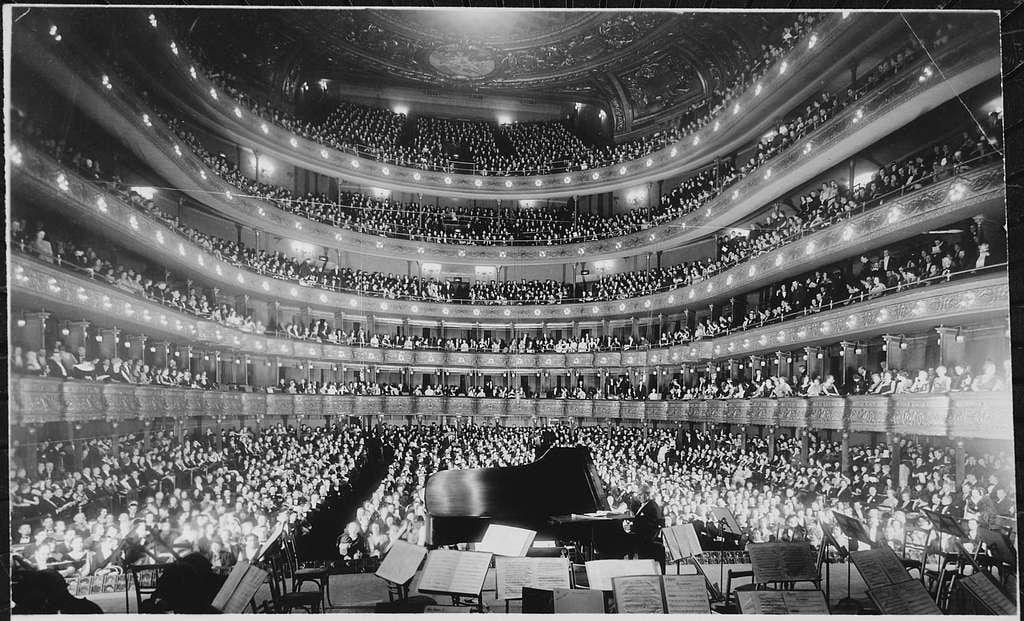
The day’s earlier history begins on Nov. 23, 1903, when Italian tenor Enrico Caruso made his Metropolitan Opera debut in New York. He sang the Duke of Mantua in Verdi’s “Rigoletto,” sharing the stage with Marcella Sembrich as Gilda and Antonio Scotti in the title role. Arturo Vigna conducted the opening-night production, making his own company debut alongside the singer who would become one of the Met’s central figures.
That appearance began an unusually durable relationship between a singer and an American opera company. Caruso sang in every Met opening night but one from his 1903 debut through his final season in 1920. His importance extended beyond the theater: In February 1904, he began making American recordings for the Victor Talking Machine Co. His stage career and recording career reinforced each other, helping listeners encounter an operatic voice without having to occupy a seat in an opera house.
Thirty-three years after Caruso’s debut, Johnson entered a very different recording setting. On Nov. 23, 1936, the Mississippi blues musician began his first commercial sessions at the Gunter Hotel in San Antonio. A temporary studio brought his singing and acoustic guitar onto records, documenting performances that could travel much farther than the musician himself. The significance lies in the music preserved there, rather than the legends that later gathered around his life.
The San Antonio recordings included “Sweet Home Chicago,” “I Believe I’ll Dust My Broom,” “Come on in My Kitchen” and “Terraplane Blues.” More recording followed in Dallas in 1937. Together, those Texas visits left a body of just 29 distinct songs. Its eventual influence was much larger than its size: Johnson’s work became a major reference point for later blues and rock performers. The hotel sessions show how a small recording project can preserve music whose widest audience will not arrive until decades later.
On Nov. 23, 1964, the Beatles released “I Feel Fine,” backed with “She’s a Woman,” in the United States. The British release followed Nov. 27. Written primarily by John Lennon and credited to Lennon-McCartney, “I Feel Fine” placed a distinctive burst of guitar feedback before its central riff. It was an early example of a major pop act making that electronic sound part of a hit record rather than treating it simply as unwanted noise.
The opening was intentional. The Beatles’ account explains that Lennon wanted Paul McCartney to play a bass note while Lennon’s guitar fed back through its amplifier. The effect was brief, but it gave the single an immediately recognizable entrance. “I Feel Fine” subsequently reached No. 1 in both Britain and the United States, demonstrating that a recording experiment could sit comfortably inside a broadly popular song. The American release anniversary marks a small but telling step toward a more adventurous pop sound.
On Nov. 23, 1993, Snoop Doggy Dogg released his debut album, “Doggystyle,” through Death Row and Interscope. Produced by Dr. Dre, the record gave the rapper a full-length statement of his own after his prominent role on Dre’s “The Chronic.” Songs including “Gin and Juice” and “Who Am I (What’s My Name)?” made his relaxed vocal delivery a defining feature of the album’s identity.
“Doggystyle” helped establish G-funk as a major sound in 1990s hip-hop. Its soul-laden approach offered a different musical atmosphere from the grittier, jazz-influenced work associated with parts of the East Coast scene. The album also moved between party music and darker storytelling, including “Murder Was the Case.” That contrast helped distinguish it from a simple collection of celebratory singles and made Snoop’s debut an important document of West Coast rap’s expanding reach.
Finally, on Nov. 23, 1999, Metallica released “S&M,” a double live album recorded with the San Francisco Symphony. Michael Kamen arranged, orchestrated and conducted the collaboration, captured April 21-22 at the Berkeley Community Theatre in California. The release brought orchestral textures to songs including “Master of Puppets,” “One” and “Nothing Else Matters,” while also featuring “No Leaf Clover.”
The collaboration earned a Grammy Award for best rock instrumental performance for “The Call of Ktulu.” More broadly, it offered a prominent example of musicians from different performance traditions rebuilding familiar material together. From Johnson’s spare hotel recordings to Metallica’s large-scale concert project, Nov. 23 illustrates several ways recorded music can extend a performance’s life — and carry its ideas to listeners well beyond the original room.
More like this:



- Most Popular


- Top Stories


- Most Recent


