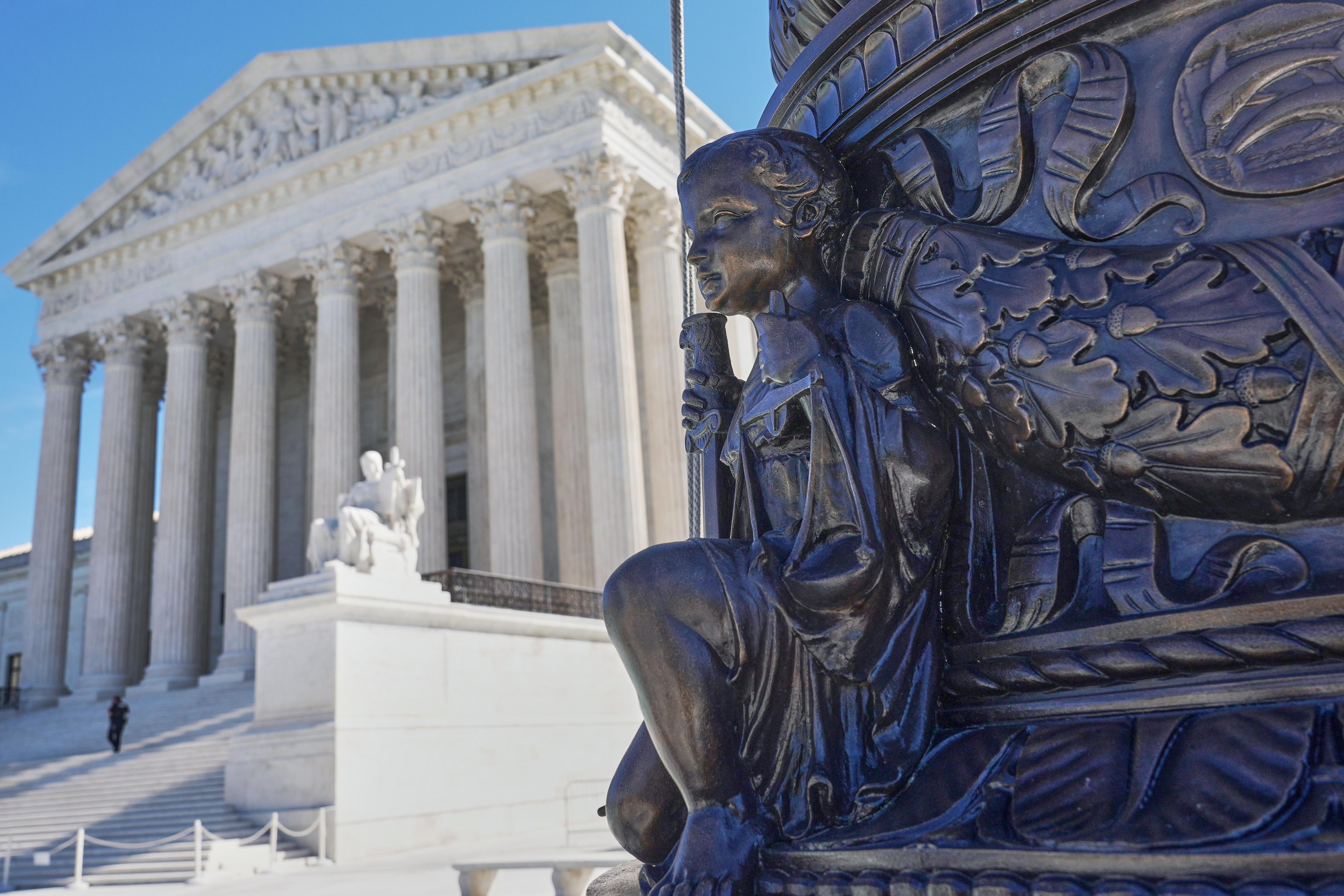
WASHINGTON (AP) — The Supreme Court on Thursday agreed to consider whether a religious institution has a right to build a shrine to the Virgin Mary on residential property next to its Kentucky church.
The church's owner — a nonprofit formed by Roman Catholic priests — claims the Kentucky Supreme Court misconstrued a federal law and erroneously ruled against its plan to build a shrine on a residential plot that it bought for the project.
Get The Latest News!
Don't miss our top stories and need-to-know news everyday in your inbox.
The nation's highest court will hear arguments in the coming months in its latest case involving religious rights.
The petitioners, Missionaries of Saint John the Baptist, argue that they have a right to build the shrine behind their church as part of their "religious mission." They say a federal law can, under certain circumstances, bar governments from implementing land use regulations that impose a “substantial burden” on religious expression.
The state's highest court concluded last December that a zoning board in Park Hills, Kentucky, a suburb of Cincinnati, lacked the authority to grant a variance allowing the church's owner to build the shrine on a residential tract.
The church group argues that the Kentucky Supreme Court's decision conflicts with U.S. Supreme Court precedent and other appellate rulings.
“The conflict among lower courts is deeply entrenched and widely acknowledged,” the group's lawyers wrote.
A neighborhood family, concerned that the project would exacerbate traffic problems, successfully challenged the zoning board's decision in state court. The family also opposed the group's Supreme Court petition, arguing there is no basis for the nation's highest court to intervene in the local zoning dispute.
The opponents say the church group knew that zoning ordinances barred it from building the shrine on neighboring residential land when it acquired the property. The opponents also argue that the group hasn't demonstrated why it couldn't build the shrine on church land.
___
Follow the AP's coverage of the U.S. Supreme Court at https://apnews.com/hub/us-supreme-court.